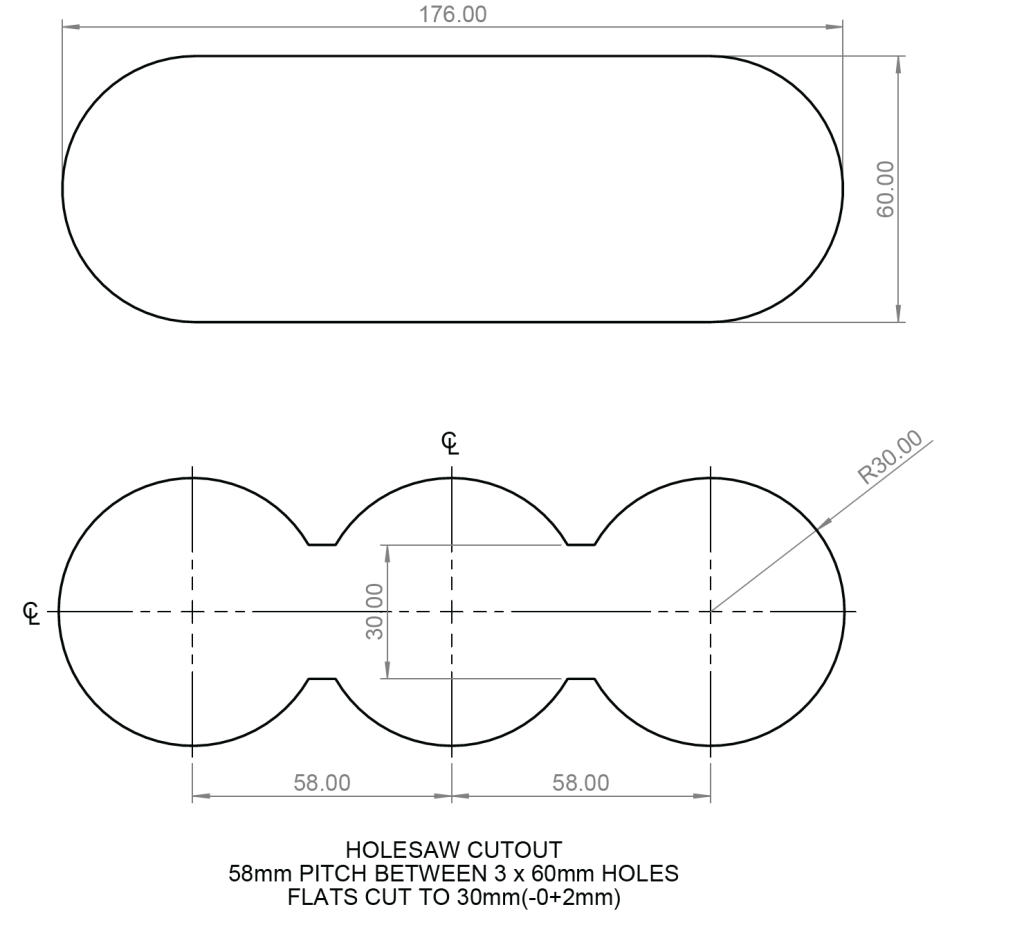
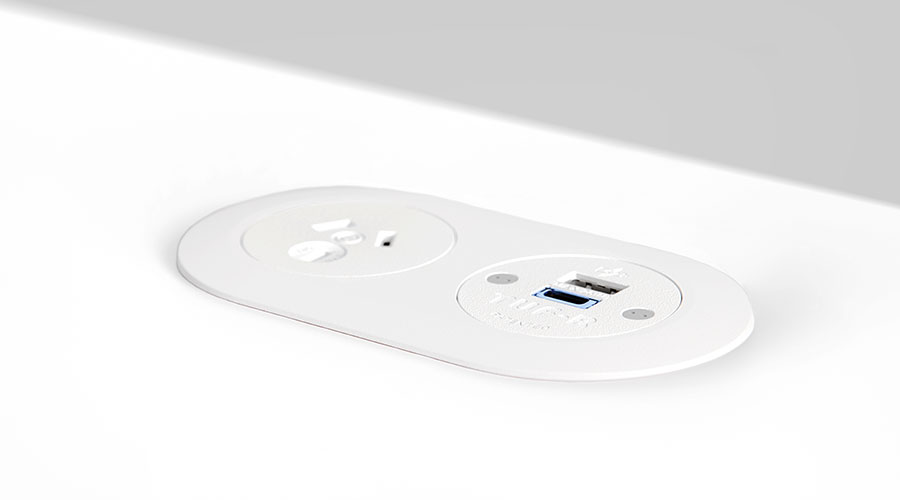
PIP2 & PIP3
Australian Business ECO-Innovation Award Winner 2024.
Manufactured from up to 63% recycled plastic content.
Pair with our Eco-Award winning TUF-R charging modules.
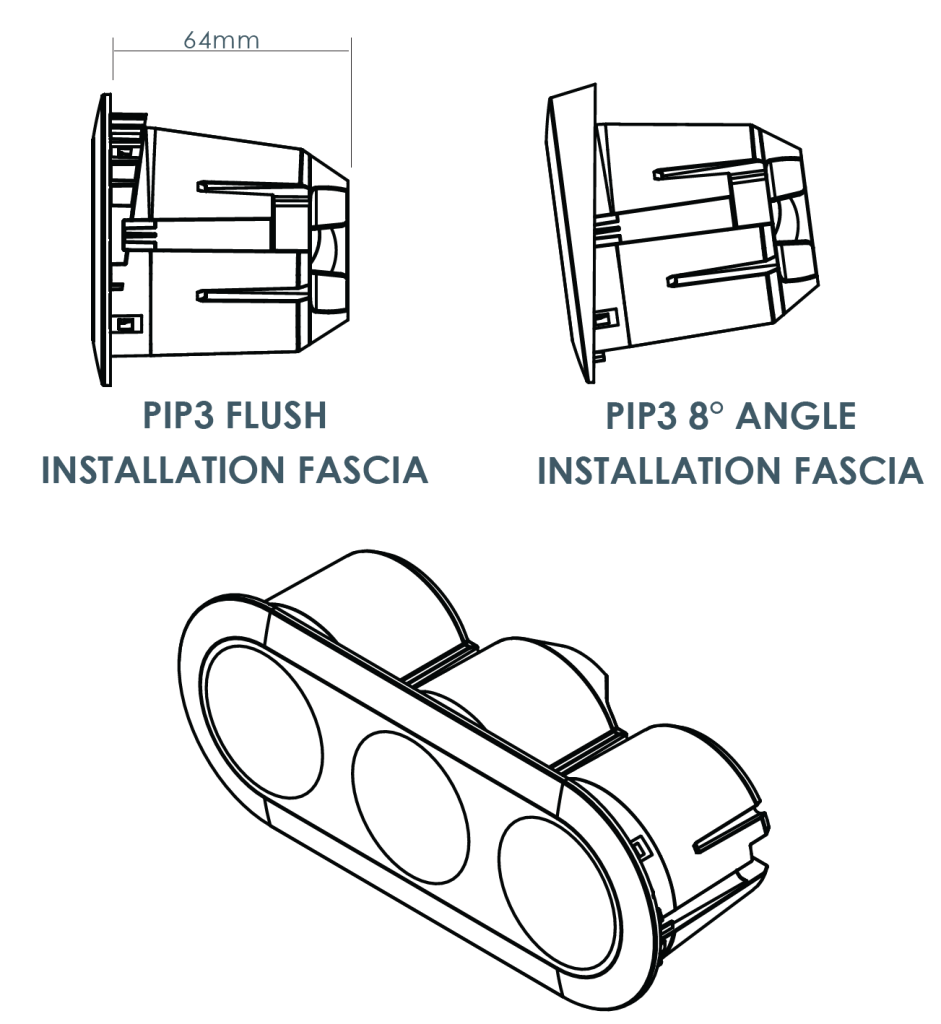
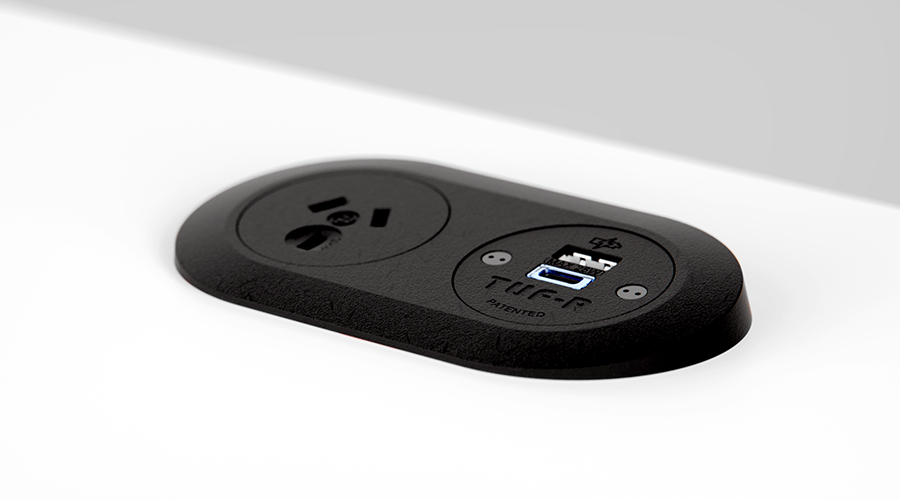
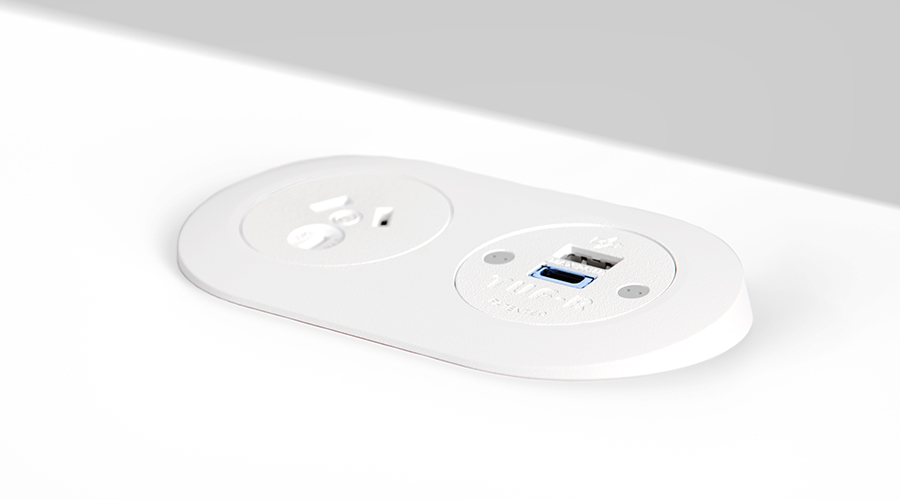
PIP2 and PIP3 are modern, low-profile power units designed for in-desk or panel mounting in commercial spaces. Seamlessly integrating with furniture, they feature either a flush faceplate for a minimalist look or an ergonomically designed 8° angled faceplate to enhance end-user access.
Built with recycled plastic for a greener tomorrow.
PIP2 and PIP3 represent the beginning of a new chapter in sustainability in OE product design. Utilising up to 63% recycled plastic, PIP2 and PIP3 are the first commercial grade power units to be made from recycled plastic.
Each component used in PIP2 and PIP3 is carefully selected and sourced, prioritising quality and sustainability throughout the process.
PIP2 and PIP3 power options:
Choose any combination of AC power sockets, wireless charging, and TUF-R modules for laptop and mobile charging.
- TUF-R (A+C) 25W canister module, charges smartphones and tablets.
- TUF-R (C+C) 30W canister module, charges smartphones and tablets.
- TUF-R (A+C) 72W canister module, charges laptops, smartphones and tablets.
- ARC wireless charging modules for mobile phones
- OE’s auto-switched AC power sockets, for a clean look and efficient operation.
TUF-R USB charging modules are replaceable
TUF-R USB modules are simple to replace without the need to turn off the power or call an electrician. The unique and patented benefit of being replaceable makes TUF-R modules perfect for areas of high traffic, such as public spaces, education, and hospitality, where if damaged, TUF-R can quickly be replaced. Replacing or upgrading TUF-R modules and not the whole product saves time, resources, and reduces waste.

TUF-R includes the worlds first reversible type-A port
TUF-R includes the world’s first reversible Type-A port, enabling a first-time connection every time. Connectors can be inserted both ways, cutting down on wear and damage from unsuccessful attempts and extending the life of the module and the product it is fitted into.
PROJECT – ECO-Power for the University of Queensland.
TUF-R is safe and designed for public spaces.
Data transfer is not possible as TUF-R has no external data connections or the ability to store enough code to put malware on a device.
- Technical Info
- Modular Components
- Fitting
- ARC Wireless - FAQ
- Resources
- Codes
- Contact Us
- Post Consumer Plastic
Configuration |
PIP 2 and PIP 3 can may be configured with a combination of power and USB charging including our class leading TUF-R USB mobile and tablet or TUF-R HP USB mobile, tablet and laptop charger. |
Construction |
Body and back – Nylon Socket fascia – Polycarbonate |
Colour Options |
Black with black sockets or White with white sockets. |
Power Cord Options |
2000mm Australia/New Zealand 10A 3 pin plug 800mm lead to J Coupler 1400mm lead to J Coupler Rear and side cable exit is available. |
Quality and Testing |
Visual: Configuration and appearance. Power sockets: Continuity, polarity, insulation and earth USB charger: Output voltage and resistance PIP2 and PIP3 have been designed and manufactured to comply with applicable national/international safety and EMC standards for the country of intended use, utilising fully certified components. “We test every pin on every connection in every socket” |
Modular Options
Choose any combination of AC power, TUF-R (25W) or TUF-R HP (72W)* USB charging modules. Wireless charging will be available from early 2024.
International sockets available on request.

*TUF-R HP (72W) must be paired with the Ø42 The Canister PSU (Power Supply Unit) and a GST08 lead.
OE Elsafe Wireless Charging Tips.
Why does my mobile phone get hot while wireless charging?
Wireless charging is not as efficient as cable charging, and this causes some heat to build up in the mobile phone and wireless charger.
Is this safe?
Yes, the extra heat is managed by both the mobile phone and the wireless charger. If either get too hot they act to reduce the power used while charging – leading to a decrease in temperature.
What can I do to help?
- Align the mobile phone and the wireless charging pad. Almost all mobile phones have their wireless charging pads in the centre of the phone, align this perfectly over the centre of the charger for an efficient charge.
- Charge the mobile phone in a cool place, i.e not in the sun.
- Use a charging compatible phone case – some thick cases cause the charging to be less efficient causing more heat and slow charging.
- For iPhones use a magsafe compatible case.
- Don’t put anything between the mobile phone and the wireless charger. Storing credit cards in the case between the mobile phone and the charger can cause excess heating and slow charging.
- Avoid metal near the wireless charger. Any metal between or near the charging coil could disrupt the charging or cause it to heat up. The wireless charger has an inbuilt feature to detect this, but it may still warm up first.
| CODE | Description | Colour |
| 648500 | PIP2 – 1GPO, 1TUF-R (25W), 2000mm Lead and 10a Three Pin Plug | BLACK |
| 648501 | PIP2 – 1GPO, 1TUF-R (25W), 2000mm Lead and 10a Three Pin Plug | WHITE |
| 648502 | PIP2 – 1GPO, 1TUF-R (25W), 800mm Lead and J Coupler | BLACK |
| 648503 | PIP2 – 1GPO, 1TUF-R (25W), 800mm Lead and J Coupler | WHITE |
| CODE | Description | Colour |
| 649005 | PIP3 – 2GPO, 1TUF-R (25W), 2000mm Lead and 10a Three Pin Plug | BLACK |
| 649006 | PIP3 – 2GPO, 1TUF-R (25W), 2000mm Lead and 10a Three Pin Plug | WHITE |
| 649007 | PIP3 – 2GPO, 1TUF-R (25W), 800mm Lead and J Coupler | BLACK |
| 649008 | PIP3 – 2GPO, 1TUF-R (25W), 800mm Lead and J Coupler | WHITE |
For assistance and pricing please contact,
Australia: ✉ sales@oeelsafe.com.au ☏ +61 2 9454 7500 / 1300 357 233
New Zealand: ✉ sales@jackson.co.nz ☏ +64 9 634 3376 / 0800 543 348
Creating low-impact products without compromising performance using post-consumer recycled plastic.
We use PCR plastics because they reduce the environmental footprint of our power units without compromising quality. In switching away from using virgin plastic, we are helping build a world where recycled plastic is a high-value material, incentivizing recycling here and abroad.
Our recycled plastic starts as most plastic does – oil. Through refinement under heat, pressure, and with the aid of chemicals, that oil ultimately becomes
This recycled plastic is then tested, confirming all of the key properties are similar to virgin polypropylene.
At OE we rigorously test all of our products to ensure they live up to our warranties and engineering standards. By using certified PCR, we are able to deliver the same durable products you expect, but with a smaller environmental impact.
By replacing virgin plastic Post-Consumer Recycled Plastic helps us provide less resource-intensive options.
Why Recycled Plastic?
Resource Conservation: PCR reduces the demand for new plastic production, conserving valuable resources such as petroleum. This, in turn, reduces greenhouse gas emissions associated with the extraction and processing of raw materials.
Energy Efficiency: Creating PCR plastic typically requires less energy compared to manufacturing virgin plastic. This leads to lower carbon emissions and a smaller carbon footprint.
Waste Reduction: Utilizing post-consumer recycled plastic diverts plastic waste from landfills and the environment, helping to combat plastic pollution.
Circular Economy: PCR promotes a circular economy, where plastic materials are continuously recycled and reused, reducing the need for virgin plastic production.
How PCR Plastic is Made?
The production of post-consumer recycled plastic involves several key steps:
Collection: Plastic items such as bottles, containers, and packaging are collected from recycling programs, curbside bins, and other sources.
Sorting: These collected items are sorted based on plastic type and color to ensure a uniform material stream.
Cleaning: The sorted plastics are thoroughly cleaned to remove contaminants like labels, caps, and food residue.
Shredding: The cleaned plastic is then shredded into small pieces or flakes.
Melting and Reprocessing: The shredded plastic is melted and reprocessed into pellets or resin, which can be used to manufacture various products.
At OE, we are committed to minimizing our environmental impact. We continuously develop and implement effective sustainability solutions across our business processes and practices. The OE team actively pursue and implement methods to minimize our environmental impact in our daily operations.
OE invite you to come on the journey so we can make a difference together.